Case study / Personal website
A personal home.
A clearer purpose.
An iteration on AshSovereign, the site you’re reading: make my software engineering focus easy to find, while keeping room for photography and the person behind the work.
- When
- November 2026
- Stack
- Next.js · TypeScript · Tailwind CSS
- Scope
- One homepage + one case study
The starting point
The existing app already had my portrait, social links, and a visual identity. But the introduction didn’t explain my engineering focus. Portfolio navigation displayed a label, Profile had no destination, and two resource links pointed to a placeholder domain. Useful content was hidden inside a fixed-height scrolling card.
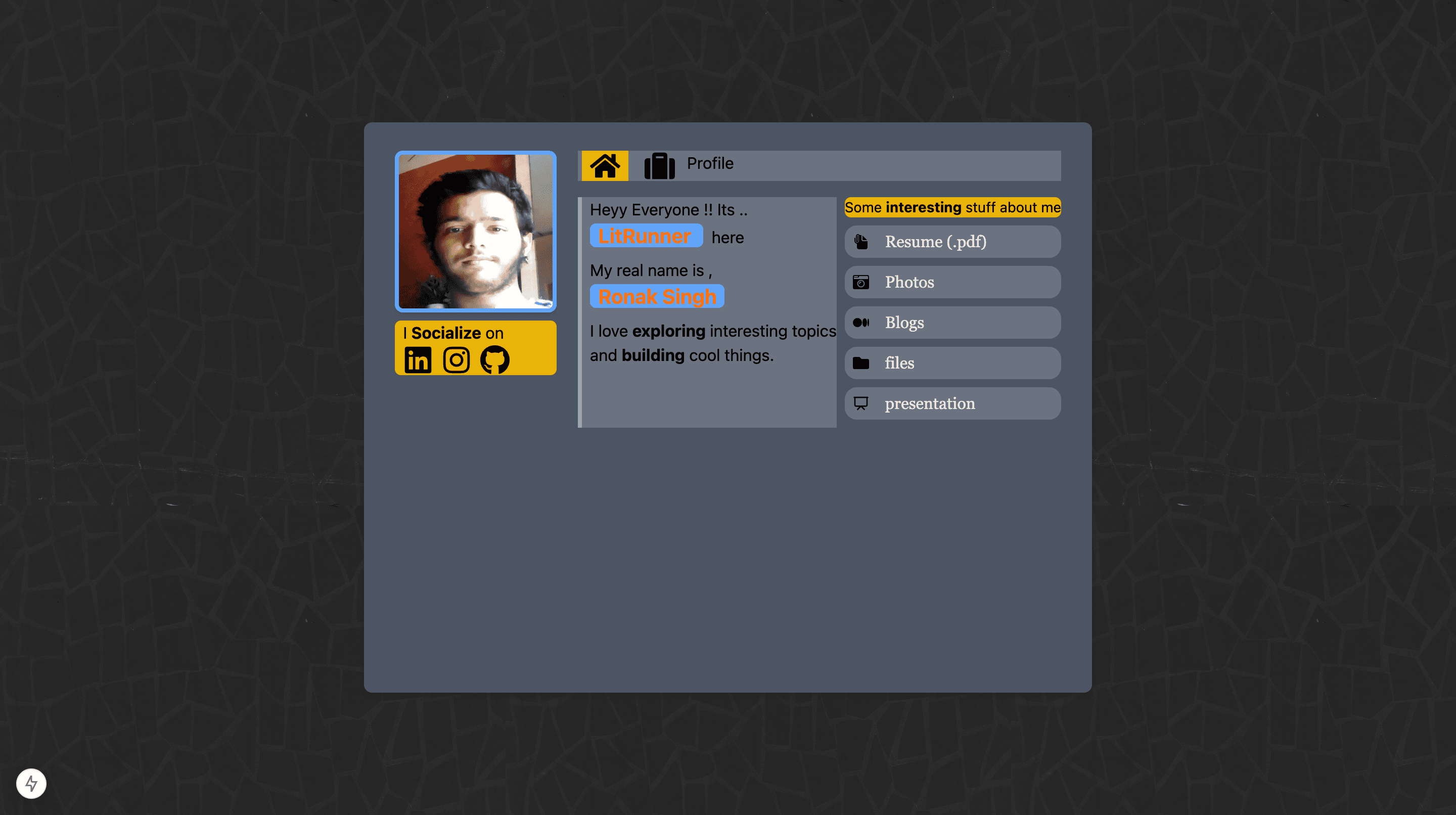
Ownership and constraints
I set the brief: reuse the application, prioritize the current job search, preserve personal interests, and only use facts I can stand behind. I selected AshSovereign as this first example, provided the current résumé destination, and chose to include my Ooty photography.
This iteration was implemented with Codex assistance, including code changes, dependency maintenance, and verification. The record distinguishes those changes from my prior work. It is a small frontend example; it does not establish backend or production-scale experience.
The main decision: fewer interactions
Work, Life, and Contact now use ordinary anchor links on one page. The case study has its own URL. This makes the destinations usable with a keyboard, supports browser history and direct links, and removes the need for client-side state just to switch between static sections.
Keeping one document also meant removing the fixed viewport height and nested scrolling. The content can grow naturally on a small screen. The existing portrait, texture, and yellow/blue accents remain; hierarchy and spacing do the heavier lifting.
A small routing detail that mattered
The homepage content component lived in src/pages/HomePage.tsx. Next.js treated that file as a separate public route, even though it was intended as a component. Moving it into src/components keeps the shared content in one place. A redirect preserves the old URL.
The lockfile also depended on an unreachable registry. Its package URLs were normalized to npm’s public registry. The framework stayed on Next.js 15, with a compatible security update rather than a new stack.
How this is checked
The checks for this iteration cover the production build, TypeScript and lint, narrow mobile layouts, keyboard navigation, image loading, and link destinations. The repository handoff records commands, observed results, and remaining gaps so that the evidence can be checked again.
npm ciinstalls the locked dependency tree.npm run lintandnpm run typecheckcheck the source.npm run build, thennpm start, produce and serve the production version.- Browser checks exercise anchor links, the case-study round trip, focus order, and mobile overflow.
The result, and what comes next
The page now explains my current focus, offers a direct path to work and contact, and keeps a little photography alongside the engineering. Empty destinations have been removed. These are observable interface changes, not claims about improved hiring outcomes.
A personal reflection can follow when I have something I want to share in my own words. Leaving space for that is more honest than inventing a story to make the page feel complete.